DEX screener is a live on-chain pair tracker built around token profiles, boosts, and alerts
Bottom line: Decentralized exchange analytics tracker for live token pairs, highlighting boosted profiles and pair alerts for new market activity.
Dex screener is a decentralized exchange analytics tool that turns raw liquidity-pool activity into searchable token profiles, charts, boost signals, and pair-level market activity. It tracks tokens after they appear in a pool and record a transaction, then organizes price, liquidity, volume, buys, sells, market cap, pair age, social information, and paid visibility signals in one trading screen.
Token profiles turn raw pairs into a readable market record
A token profile in Dex screener starts from the token address, chain, pair address, base token, and quote token. That matters because the same asset name appears across multiple pools, wrapped assets, and imitation contracts. The profile view gives a user a fast way to separate a Solana meme token paired with SOL from an Ethereum token paired with WETH or a Base token paired with USDC.
The tracker lists tokens automatically after liquidity exists and trading activity begins. Profile data then expands through token information, icons, headers, descriptions, and links when available. Fully diluted valuation follows the supply and price relationship, while market capitalization uses circulating supply data when the system has a valid source for it. The best profiles combine a real contract address, active liquidity, identifiable links, and trading that survives beyond the first burst of attention.
Boosts, Golden Ticker signals, and the trending screen
Boosts are paid visibility units that increase a token's presence across the platform for a limited period. They appear beside a token and feed into the broader visibility system, which also considers real activity. Official documentation describes boost packs lasting from 12 to 24 hours, with a Golden Ticker visual treatment unlocked while a token has at least 500 active boosts.
On Dex screener, that paid signal sits next to organic data rather than replacing it. A boosted token with weak liquidity, one-sided trades, or a thin holder base still shows those weaknesses in the surrounding numbers. A boosted token with steady volume, visible makers, active transactions, and a verified profile gives a cleaner research surface because paid attention and on-chain activity point in the same direction.
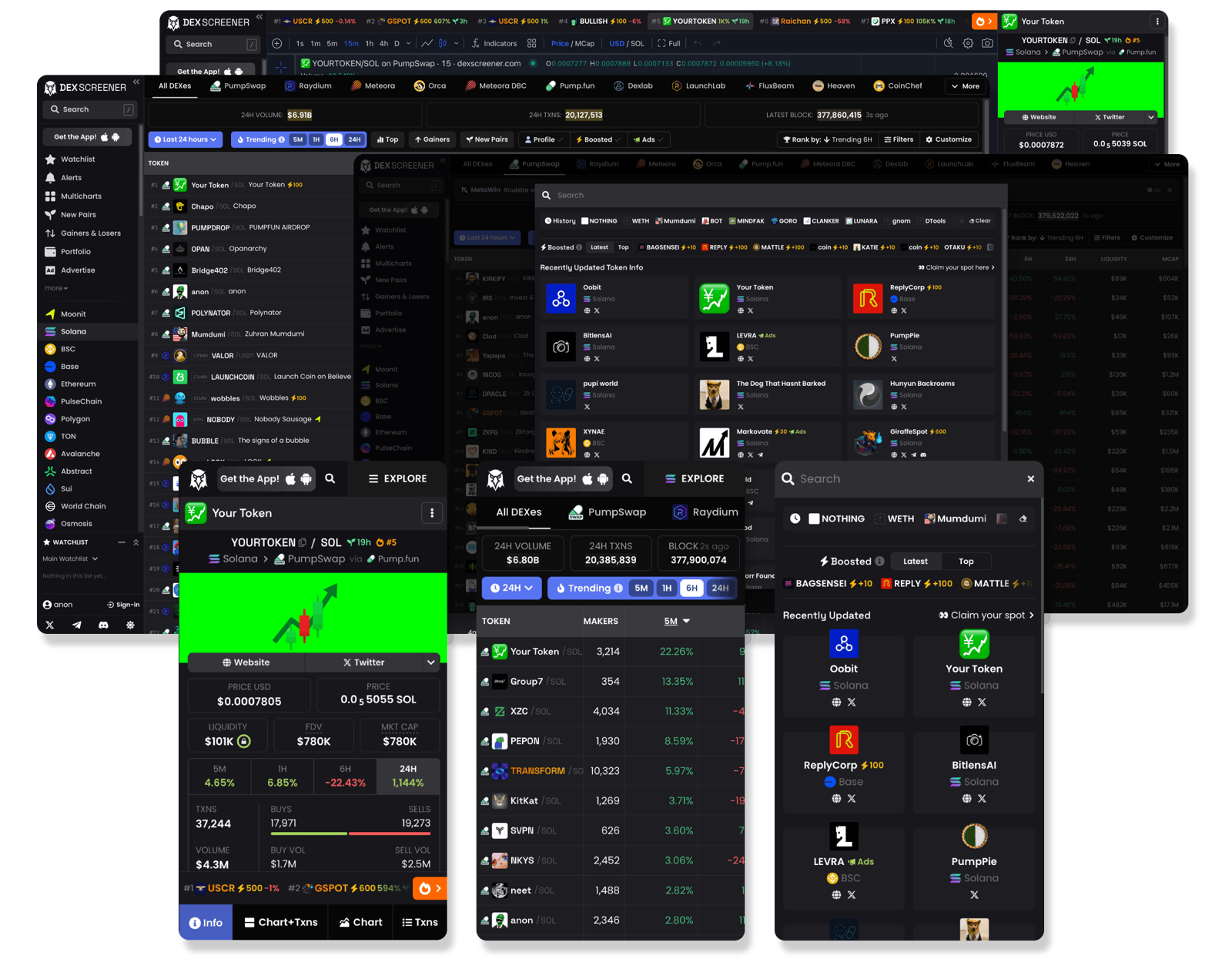
The trending screen uses a proprietary score that includes market activity, community engagement, and credibility signals. Useful inputs include volume, liquidity, transactions, unique makers, holders, page visitors, reactions, verified token information, and security checks. The exact formula stays private, so the visible rank works best as a discovery feed, not as a standalone decision.
A fast workflow for checking a new pair
The fastest way to use Dex screener is to search by token address or pair address first, then read the chart only after the contract is confirmed. Names and tickers repeat constantly in crypto, especially around Solana launches and meme tokens. An address-first workflow removes most confusion before any chart interpretation begins.
After finding the pair, scan the chain, exchange, base token, quote token, liquidity, 24-hour volume, short-window price change, transaction split, and pair creation time. A brand-new pool with dramatic price movement and very little liquidity behaves differently from an established Uniswap, Raydium, PancakeSwap, or Meteora pool with deep trading history. The time windows matter: five-minute flow shows immediate momentum, while one-hour and 24-hour views reveal whether the first move continued or faded.
- Confirm the chain and pair address before comparing charts.
- Check liquidity before treating a price move as meaningful.
- Compare buys and sells across several time windows.
- Look at unique makers instead of only total transactions.
- Review profile links and security context before interacting with a contract.
Pair alerts as a monitoring habit, not a price prediction
Pair alerts become useful when they are tied to concrete market changes: a break above a price level, a liquidity drop, a sudden volume expansion, or a new burst of buys and sells. Dex screener becomes more useful when alerts are treated as reminders to reopen the pair page and read the latest state, rather than signals that a token deserves action.
Good alert design starts with the risk in the pool. A low-liquidity token needs alerts around liquidity and sell pressure because price moves exaggerate quickly. A more established pair deserves alerts around volume, trend breaks, and support levels. Teams and analysts that build their own monitoring stack use pair data, token profile feeds, boost feeds, and WebSocket streams to trigger notifications when market structure changes.
API feeds for profiles, boosts, pairs, and search
Dex screener exposes structured data for builders who want token discovery, boost monitoring, pair lookup, and search inside bots, dashboards, or internal tools. The REST API includes feeds for latest token profiles, latest boosted tokens, tokens with the most active boosts, paid orders for a token, pair lookup by chain and pair address, token-pair lookup, and search queries.
WebSocket streams cover real-time updates for token profiles, boosts, ads, and community takeovers. That streaming layer fits alerting systems because it reduces the need to poll every few seconds. A Telegram bot, Discord bot, spreadsheet pipeline, or portfolio dashboard still needs its own filtering logic, especially when watching fast Solana launches where a large number of token profiles appear in short windows.
What the pair page numbers actually tell you
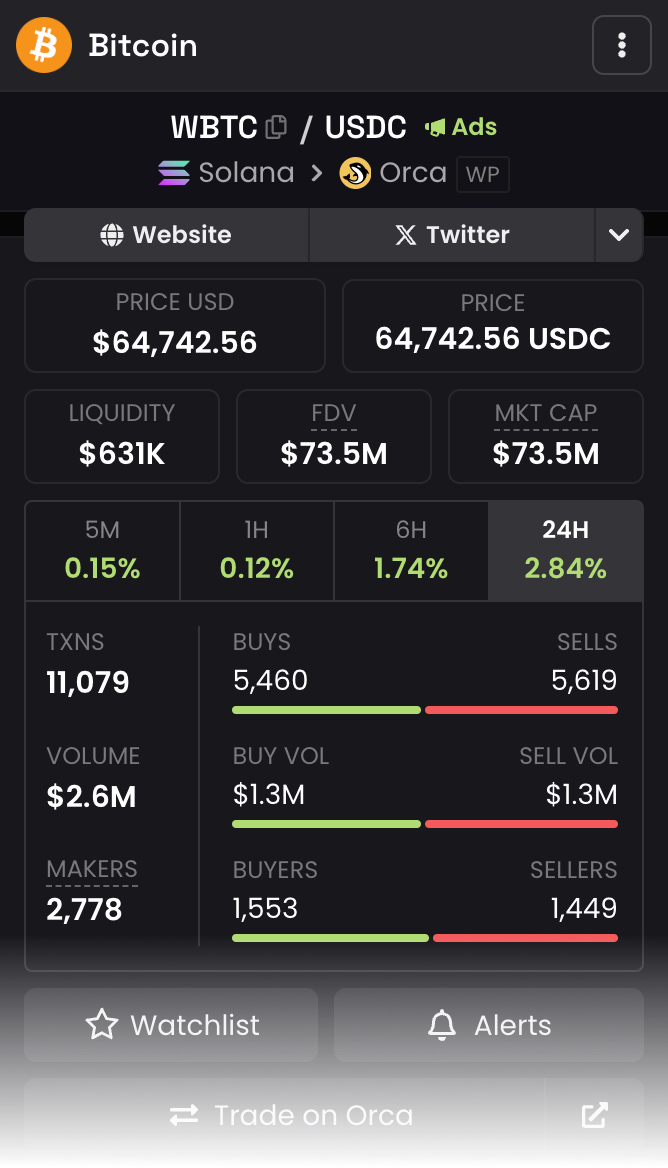
Liquidity shows how much value sits in the pool and sets the practical depth for swaps. Volume shows trading demand over a selected window. Transactions show the count of buys and sells, while unique makers add a better view of how many wallets are participating. Price change gives direction, but it becomes less meaningful when liquidity is shallow or trades come from a narrow wallet cluster.
FDV and market cap deserve separate attention. Fully diluted valuation applies price to token supply after accounting for burned supply under the platform's formula. Market cap reflects circulating supply when the system has an appropriate circulating supply input. When both figures look far apart, the difference points to supply structure rather than chart momentum. That distinction matters for tokens with burns, vesting, migrations, or self-reported circulating supply.
Charts use TradingView-style tools, so common technical overlays such as moving averages, RSI, volume, and drawing tools fit naturally into the interface. The chart is strongest when paired with pool data. A candle pattern on a low-liquidity pair carries less weight than the same pattern on a pair with deeper liquidity and broader maker participation.
Where paid visibility creates a blind spot
A paid boost on Dex screener increases exposure, and exposure attracts attention before fundamentals are fully understood. That creates a predictable blind spot: users see activity, reactions, a polished profile, and a higher position in discovery surfaces, then skip contract-level questions. The healthier reading is to treat boosts as marketing context and read them beside liquidity, transaction quality, holder distribution, audit signals, and token information.
The most common mistake is mistaking a profile for endorsement. A page with an icon, description, social links, active boosts, and a fast chart still represents an on-chain token with smart-contract and liquidity risk. One concrete caution belongs here: if the pool is new, thin, and dominated by a small set of wallets, the chart can reverse faster than the interface updates a user's assumptions.
DEXTools, GeckoTerminal, Birdeye, and the fit for each
Several analytics tools overlap with this workflow. DEXTools has long served Ethereum and EVM traders who want pair discovery, score-style context, and chart tooling. GeckoTerminal, from the CoinGecko ecosystem, is useful when a user wants decentralized exchange pool data close to broader token-market reference data. Birdeye has a strong Solana and multi-chain data reputation, with emphasis on wallet, token, and market analytics.
Importantly, Dex screener earns its place through speed, broad pair search, token profile visibility, boosted-token discovery, and a simple layout that handles very new markets. The differences are practical rather than philosophical.
| Tool | Best fit | Useful distinction |
|---|---|---|
| DEXTools | EVM pair research | Established chart and pair discovery workflow |
| GeckoTerminal | Pool context beside token-market data | Strong connection to the CoinGecko data ecosystem |
| Birdeye | Solana-heavy market monitoring | Detailed token and wallet analytics surfaces |
| This tracker | New pair discovery and boosted profiles | Fast search by token, pair, and chain context |
Putting the screen to work without chasing every candle
In practice, Dex screener is strongest when it becomes a repeatable research station: address search first, profile context second, liquidity and maker review third, chart reading last. That order keeps attention on the mechanics that shape tradability before price movement takes over the screen.
The token profile, boost count, trending placement, pair chart, and alert workflow each answer a different question. Together they show what the token is, where it trades, how active the pool is, whether attention is paid or organic, and when the market changes enough to deserve another look. Used that way, the platform turns noisy decentralized exchange activity into a cleaner watchlist for live crypto markets.
Helpful answers about Dex screener
How long does a boost stay visible on a token pair?
Boost packs are time-limited visibility products, and official documentation describes active boosts as lasting from 12 to 24 hours based on the pack. The active boost count remains visible while the boost is running. A Golden Ticker visual treatment appears only while the token has at least 500 active boosts, so that signal disappears when the active count falls below the threshold.
Cost of boosts in a token profile: where should a user look?
Boosts are purchased as paid visibility packs through the token page workflow in a web browser, and the current purchase screen is the place where active pack options and pricing are shown. The important research point is the visible boost count, active duration, and surrounding pair quality. A boost is marketing context, so it belongs beside liquidity, transactions, makers, and profile credibility.
Can a project appear before its social links are filled in?
Yes. Tokens are listed automatically after they are added to a liquidity pool and record trading activity, so the first version of a profile can appear before the project has a full description, icon, header, or social links. Additional profile information arrives through recognized token lists or enhanced token information. Early profiles therefore require extra attention to addresses and pool data.
Does the mobile app support the same boost purchase workflow as desktop?
The mobile apps support market watching on iOS and Android, but official boosting instructions place the purchase action in a web browser through the token page. That means mobile is useful for monitoring profiles, charts, and pairs, while the boost purchase workflow belongs on desktop or mobile web. Users tracking alerts should keep that difference in mind.
Which alert threshold matters most for a brand-new pair?
Liquidity is the first alert threshold to watch on a brand-new pair because shallow pools exaggerate price movement and make exits harder. A second useful threshold is transaction balance across buys and sells over short windows. Price alerts become more useful after the pool has enough depth, repeated makers, and a trading history that extends beyond the launch spike.